
Table of Contents
- Why Cotton Shirts Keep Shrinking (And What's Actually Happening)
- Step-by-Step: How to Stop Cotton Shirts Shrinking in the Wash
- Air Drying vs Machine Drying Cotton: Which One Wins?
- How to Wash Graphic Tees Without Fading the Print
- What to Know About Pre-Shrunk Fabric
- Hidden Shrinkage Risks: Ironing, Steaming, and Hard Water
- How to Unshrink a Cotton Shirt That's Already Too Small
- Frequently Asked Questions
Last Updated: August 29, 2026
Why Cotton Shirts Keep Shrinking (And What's Actually Happening)
Cotton shirts shrink because cotton is a natural fiber that responds to heat, water, and mechanical stress in ways synthetic fabrics don't. At MS Digital Innovations, we design and sell premium ring-spun cotton tees built for long-term wear, so understanding this matters to us as much as it does to you.
Cotton shirt shrinkage is the dimensional change that occurs when cotton fibers contract under conditions that disrupt their natural relaxed state. Once you understand the mechanics, preventing it becomes straightforward.
Fiber Contraction and Thermal Agitation
Cotton is made of cellulose fibers that are stretched and held under tension during manufacturing. When heat and water are introduced, the fibers absorb moisture and relax, releasing that stored tension and contracting back toward their natural length. This process is called fiber contraction, and thermal agitation from hot water or a heated dryer accelerates it dramatically.
Cold water matters because hot water triggers rapid fiber contraction across the entire garment simultaneously, producing uniform shrinkage that makes a medium feel like a small. According to USDA Agricultural Research Service fiber science resources, cellulose-based fibers like cotton are particularly susceptible to hygroscopic swelling, meaning they absorb water readily, which is the first step in the shrinkage cycle.
Garment Construction and Fabric Weave
A tightly woven jersey knit has more interlocked fibers per square inch than a looser weave, meaning more points of tension and more potential for contraction when heat is applied.
Ring-spun cotton is made by continuously twisting and thinning cotton strands to create stronger, softer yarn. That tighter construction gives ring-spun tees better tensile strength and generally better dimensional stability than open-end spun alternatives. Seam placement, cut, and whether the fabric has been pre-washed during manufacturing all factor in too. A shirt that has never been pre-shrunk carries the full shrinkage potential of the raw fabric.
Step-by-Step: How to Stop Cotton Shirts Shrinking in the Wash
Preventing cotton shirt shrinkage comes down to four consistent habits that require no special equipment.
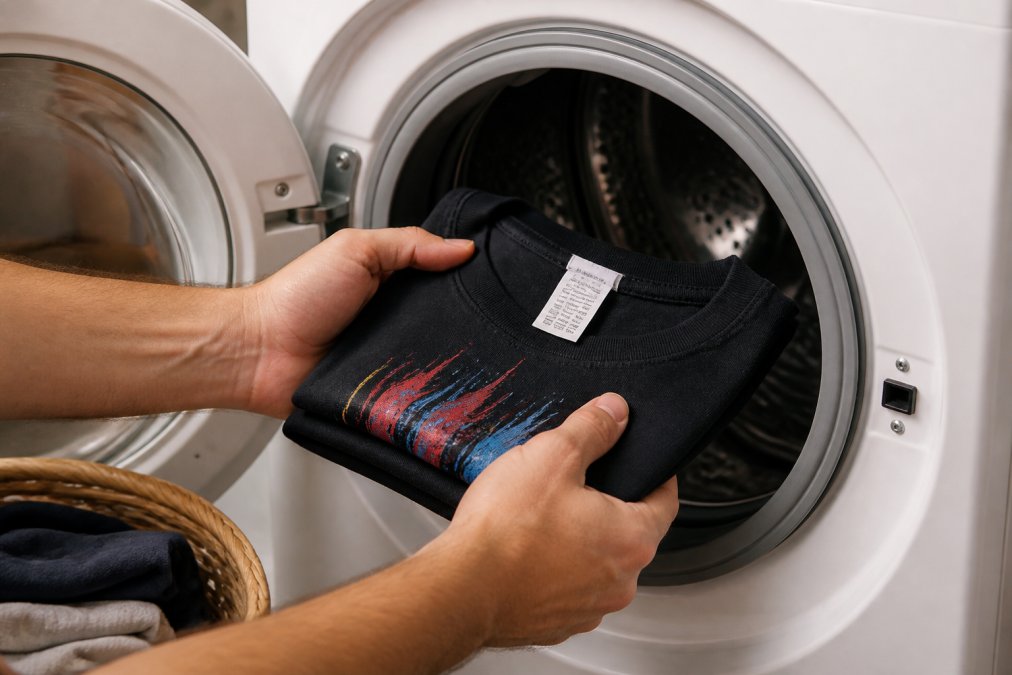
Step 1: Check the Laundry Care Label
The laundry care label is the most underused tool in garment maintenance. Every label carries standardized symbols that tell you the maximum safe temperature, whether machine washing is appropriate, and how the garment should be dried. The ASTM International standard ASTM D5489 care labeling standard for textiles governs what these symbols mean. Look for the wash basin symbol with a number inside, that number is the maximum water temperature in Celsius. When in doubt, treat the label as non-negotiable.
Step 2: Use Cold Water and the Delicate Cycle
Cold water is the single most effective prevention tool for cotton shirt shrinkage. Set your machine to a cold water cycle at or below 30°C (86°F) and select the delicate wash or gentle cycle setting. The delicate cycle reduces mechanical action, preserving fabric integrity over dozens of washes.
Step 3: Choose a Gentle Detergent and Watch the Spin Speed
Harsh detergents with strong surfactants can degrade cellulose fibers over time, making fabric more susceptible to shrinkage and pilling. Use a gentle detergent formulated for delicates or cold water. Drop your spin speed to medium or low, your shirt will take slightly longer to dry, but the fabric weave will benefit.
| Care Step | Setting to Use | What to Avoid |
|---|---|---|
| Water temperature | Cold (30°C / 86°F or below) | Hot or warm cycles |
| Wash cycle | Delicate or gentle | Normal or heavy duty |
| Detergent | Gentle, cold-water formula | Enzyme-heavy or bleach-based |
| Spin speed | Low to medium | High spin |
| Drying method | Air dry flat | High-heat tumble dry |
Step 4: Use a Laundry Mesh Bag for Extra Protection
A laundry mesh bag reduces the direct mechanical action the drum exerts on your shirt and prevents snagging on zippers or hardware. For graphic tees with DTG prints, the mesh bag limits direct abrasion against the print surface.
Air Drying vs Machine Drying Cotton: Which One Wins?
Air drying wins. Machine drying, even on low heat, introduces heat and mechanical agitation simultaneously. A cotton shirt that survived the wash cycle perfectly can still shrink significantly in a dryer.
Lay your shirt flat on a clean dry towel to dry. Flat drying is preferable to hanging for heavier cotton tees because hanging while wet can cause uneven stretching and distort shoulder seams and necklines. Dry in a well-ventilated area away from direct sunlight to prevent color fading and DTG print degradation.
If you must machine dry, use the lowest heat setting and remove the shirt while still slightly damp. Finish drying it flat.
How to Wash Graphic Tees Without Fading the Print
Turn Your Tee Inside Out
Turning your tee inside out before washing puts the print face against itself rather than against the drum or other garments. Direct abrasion is the primary mechanical threat to DTG prints, and inside-out washing eliminates most of it. This applies to drying too.
Detergent Impact on Fiber Integrity and Print Vibrancy
Standard detergents can break down the bonding agents in DTG inks over repeated washes. Use a gentle, dye-free detergent and avoid optical brighteners, which can create a haze effect over dark or vibrant prints. Cold water washing helps too: cold water causes less ink migration than warm water.
What to Know About Pre-Shrunk Fabric
Pre-shrunk fabric has been deliberately shrunk during manufacturing before the garment is cut and sewn. The process, often called "Sanforization," uses controlled moisture and heat to trigger most of the fiber contraction before the shirt reaches you.
Pre-shrunk doesn't mean shrink-proof. Most pre-shrunk cotton garments retain a small residual shrinkage margin, typically a few percent, that can still occur under repeated high-heat washing and drying. For practical purposes, a pre-shrunk cotton tee washed in cold water and air dried will hold its size reliably for years.
Hidden Shrinkage Risks: Ironing, Steaming, and Hard Water
Ironing at high heat causes localized fiber contraction, particularly at seams and hems. Use a low to medium heat setting and keep the iron moving.
Steaming introduces heat and moisture simultaneously. For graphic tees, steam can soften DTG ink temporarily, making it more susceptible to transfer. Let steamed garments cool completely before folding.
Hard water contains calcium and magnesium minerals that deposit on fabric fibers over repeated washes. This mineral buildup stiffens the fabric and can make cotton feel smaller even if dimensions haven't changed. A water softener or white vinegar in the rinse cycle helps prevent accumulation. According to EPA WaterSense program on water quality, hard water affects a significant portion of households.
How to Unshrink a Cotton Shirt That's Already Too Small
A shrunken cotton shirt is not necessarily a lost cause. Cotton fibers can be coaxed back toward their original length through a process combining moisture, gentle chemical relaxation, and careful stretching.
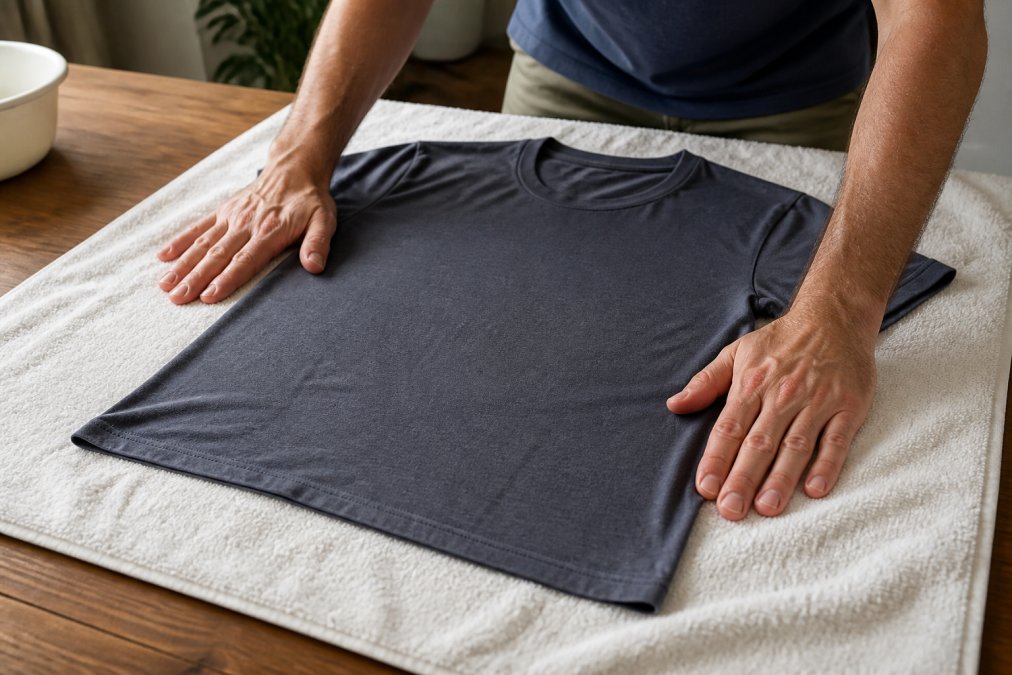
The Hair Conditioner Soak Method
- Fill a basin with lukewarm water (not hot).
- Add one to two tablespoons of standard hair conditioner and mix until dissolved.
- Submerge the shrunken shirt and let it soak for 20 to 30 minutes.
- Do not rinse. Gently squeeze out excess water without wringing.
- Lay the shirt flat on a clean dry towel.
- Roll the shirt inside the towel to absorb more moisture.
- Unroll and begin the stretching process.
The conditioner solution works because conditioning agents coat the cellulose fibers and reduce friction between them, allowing the fibers to slide and extend rather than remain locked in their contracted state.
Flat Drying and Gentle Stretching
With the shirt damp and fibers relaxed, gentle stretching can restore meaningful size. Work methodically: stretch the body lengthwise first, then the chest width, then the sleeves. Apply even, consistent pressure rather than sharp tugs. Pin or weight the shirt at its stretched dimensions using books or towel clips to hold the shape as it dries flat.
Results vary based on how much the shirt shrank, how many times it has been heat-dried, and the original fabric construction. Severely shrunken shirts may only partially recover.
Keeping cotton shirts in shape over the long term comes down to consistent habits: cold water, the delicate cycle, gentle detergent, and air drying flat. If you're starting with a quality garment built for durability, those habits pay off for years. MS Digital Innovations tees are made from premium ring-spun cotton with DTG-optimized construction, meaning they're designed to hold their dimensions and print vibrancy with the right care. Shop All tees at MS Digital Innovations and get a shirt worth protecting.
Frequently Asked Questions
Why does my cotton shirt shrink after I wash it?
Cotton is made of cellulose fibers that are stretched during manufacturing. Heat and mechanical action in the wash cause those fibers to contract back toward their natural length, a process called fiber contraction. Hot water accelerates this, and the tumbling in a dryer compounds it. The result is a shirt that's noticeably smaller than when you bought it. Washing in cold water and air drying are the two most effective ways to prevent this from happening.
What water temperature prevents cotton from shrinking?
Cold water, typically 60°F or below, is the safest choice for cotton shirts. At this temperature, thermal agitation is too low to trigger significant fiber contraction. Most modern detergents clean effectively in cold water, so you're not sacrificing cleanliness. Always pair cold water with the delicate or gentle cycle to reduce mechanical action, which is the second major cause of shrinkage beyond heat exposure.
Is shrinkage permanent in 100% cotton?
Not always. If the shrinkage is mild, the hair conditioner soak method can restore some dimensional stability. Soaking the shirt in lukewarm water mixed with a generous amount of hair conditioner relaxes the cellulose fibers enough to allow gentle stretching. Lay the shirt flat on a towel, stretch it carefully back toward its original dimensions, and let it air dry. Severe shrinkage is harder to reverse, but moderate cases often respond well to this technique.
Can air drying stop cotton shirts from shrinking?
Yes, air drying is one of the single most effective steps for preventing cotton shirts from shrinking. A dryer's heat and tumbling action cause both fiber contraction and mechanical stress. Skipping the dryer entirely and laying shirts flat or hanging them in good air circulation eliminates that risk almost completely. For graphic tees specifically, air drying also protects the DTG print from heat damage that can cause cracking or fading over time.
This article was written using GrandRanker