
Table of Contents
- What Is the Best Fit for Graphic Tees? The Short Answer
- Graphic Tee Sizing Guide: How a Tee Should Fit on Your Body
- Classic Fit vs. Relaxed Fit: Which Silhouette Works for You?
- Fabric Quality: Why GSM and Cotton Matter for Fit and Feel
- Best Graphic Tees for Sensitive Skin: Choosing Soft, Non-Irritating Fabrics
- How to Style Graphic Tees for Men: From Streetwear to Smart Casual
-
Common Fit Mistakes and How to Avoid Them
- Mistake 1: Relying on the Tag Size Instead of Measurements
- Mistake 2: Ignoring the Drop Shoulder Effect
- Mistake 3: Choosing Fabric Weight Without Considering Climate
- Mistake 4: Overlooking the Print-to-Body Ratio
- Mistake 5: Skipping the Collar Check
- The Measurement Checklist: 5 Numbers to Know Before You Buy
- Final Verdict: Finding Your Perfect Graphic Tee
- Frequently Asked Questions
Last Updated: September 7, 2026
What Is the Best Fit for Graphic Tees? The Short Answer
The short answer to what is the best fit for graphic tees is one where the shoulder seams align with your natural shoulder edge, the torso skims your chest without clinging, and the hem falls near your mid-hip, balancing print placement with your proportions. This guide breaks down the technical details of fit, fabric, and styling.
Most guides tell you to just "size down for a slimmer look," but that advice ignores how a graphic tee is constructed, the print itself changes how the garment drapes. Below, we cover the exact measurements that matter, the difference between classic and relaxed silhouettes, and why fabric quality determines fit over time.
Graphic Tee Sizing Guide: How a Tee Should Fit on Your Body
A graphic tee sizing guide starts with three reference points: shoulder seams, sleeve length, and torso hem position. These matter more than the letter on the tag because sizing varies dramatically between brands and even between colorways of the same shirt.
Shoulder Seams and Sleeve Length
The shoulder seam should sit exactly at the edge of your shoulder bone, not creeping toward your neck or sliding down your upper arm. When the seam drops past your shoulder, the entire torso pulls outward, distorting the graphic print across your chest. Sleeves should end roughly mid-bicep for a classic fit, while relaxed fits may extend a bit further, but never past your elbow.
Torso and Hem Length
The hem of a graphic tee should fall around your mid-hip, covering your belt line but stopping before your back pockets. A torso that is too long creates a boxy, disproportionate look, while one that is too short rides up and causes the graphic to warp. Check the half-chest measurement when shopping online, not just the size label, since a size medium can range from 20 to 22 inches across the chest depending on the manufacturer.
Classic Fit vs. Relaxed Fit: Which Silhouette Works for You?
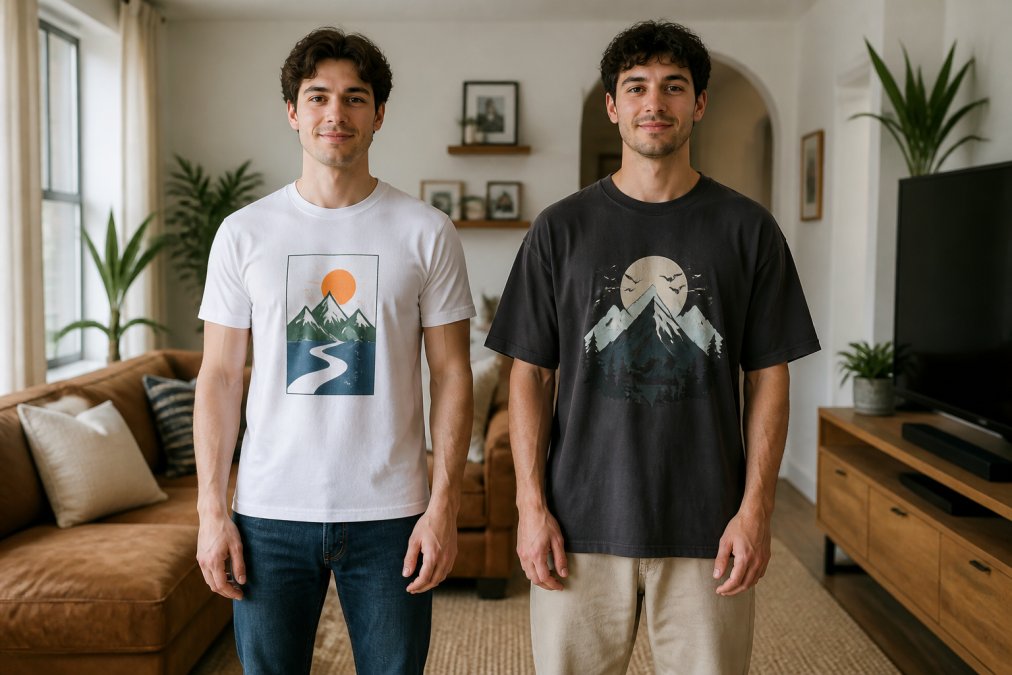
Classic fit follows your natural body line with a straight cut from chest to hem, making it the most versatile option for everyday wear. Relaxed fit adds extra room through the torso and sleeves, creating a boxier silhouette for streetwear aesthetics and layering. Neither is objectively better, but each suits different body types and styling goals.
For many, a classic fit is a versatile default because it flatters a wider range of body proportions without looking too tight or overly baggy. Relaxed fits shine when layering over hoodies or wanting an intentional oversized look, but they require careful attention to graphic placement so the print does not appear stretched.
Fabric Quality: Why GSM and Cotton Matter for Fit and Feel
Fabric weight, measured in GSM (grams per square meter), directly determines how a graphic tee holds its shape and drapes. Lightweight tees around 150 GSM feel soft but tend to cling and lose structure, while heavyweight options above 180 GSM maintain a crisp silhouette and resist stretching (peer-reviewed research). But GSM alone doesn't tell the full story, knit structure and fiber composition matter just as much.
Knit Structure: Jersey vs. Pique vs. Slub
Most graphic tees use a jersey knit, which creates a smooth, flat surface ideal for print adhesion. Within jersey knits, the difference comes down to yarn thickness and twist. A standard open-end cotton yarn is coarser and fuzzier. Ring-spun cotton twists fibers into finer, stronger yarns for a softer hand-feel without sacrificing durability.
The Technical Fabric Gap: Blends and Performance Fibers
Most style guides stop at "100% cotton is best," but that ignores how fabric choice should match your use case. For active wear or hot climates, a cotton-polyester blend (typically 60/40 or 50/50) offers moisture-wicking properties and reduced shrinkage, though it sacrifices some breathability. For gym or athletic contexts, look for tees with a polyester or nylon content of 30% or higher combined with a moisture-management finish.
For everyday casual wear, a 100% ring-spun cotton at 180-200 GSM offers a predictable drape and holds prints without cracking (peer-reviewed research). The trade-off is maintenance: pure cotton absorbs moisture, wrinkles easily, and can shrink up to 5% despite preshrunk labeling. If you live in a humid climate or sweat heavily, a tri-blend (cotton, polyester, rayon) at 140-160 GSM offers a softer drape and better moisture management, though it tends to cling more.
Collar and Hem Construction: The Hidden Fit Determinants
A tee's collar construction directly affects how the fit feels and how long it lasts. A ribbed collar with a double-needle stitch maintains its shape through repeated washing, while a single-needle collar on lightweight fabric may stretch into a boat-neck shape. A collar too wide relative to the shoulder width makes the tee look sloppy even when the torso fits perfectly.
Hem construction matters too. A double-needle hem with a coverstitch lies flat and resists curling, while a single-needle hem on heavyweight fabric can flip outward, disrupting the clean line at your hips. High stitch density (8-10 stitches per inch) also contributes to a smoother interior surface and prevents seam failure at stress points.
Shrinkage and Fit Stability: What the Label Doesn't Tell You
Preshrunk jersey knit fabrics help maintain true-to-size measurements, but "preshrunk" is not a guarantee. The shrinkage percentage depends on the finishing process, sanforized fabrics undergo mechanical compression to prevent shrinkage, while non-sanforized fabrics can shrink up to 8% on the first wash (peer-reviewed research). A premium ring-spun cotton tee at 180 GSM is designed to fit consistently wash after wash, whereas other options may shrink or warp.
For a fit-stable option, look for tees labeled "garment-dyed" or "washed," which have already undergone the shrinkage process before you buy them. These may feel slightly softer and look slightly faded out of the package, but they are designed to hold their dimensions reliably.
Best Graphic Tees for Sensitive Skin: Choosing Soft, Non-Irritating Fabrics
Graphic tees for sensitive skin often prioritize softness and breathability over heavy, stiff materials that cause friction. Look for 100% ring-spun cotton in solid colors, since finer yarns create a smoother surface that does not scratch or irritate. Consider avoiding polyester-heavy heather blends if you have known sensitivities, as synthetic fibers can trap heat.
A seamless double-needle collar and a tear-away label can make a noticeable difference for sensitive skin, helping to eliminate scratchy tags and rough neckline seams. When shopping, feel the fabric between your fingers if you can, and check fiber composition percentages rather than trusting vague "ultra-soft" marketing claims.
How to Style Graphic Tees for Men: From Streetwear to Smart Casual
Styling graphic tees for men comes down to balancing the print's visual weight with the rest of your outfit. A bold, colorful graphic pairs best with neutral bottoms like black jeans or olive chinos, letting the tee remain the focal point. Minimalist graphics in single colors offer more styling versatility, working equally well under a blazer or with joggers.
Layering with Jackets and Flannels
Layering transforms a graphic tee from casual to intentional. An open denim jacket or flannel over a fitted graphic tee adds structure while keeping the print visible, creating a smart casual outfit for dinners or casual Fridays. Keep the outer layer unbuttoned so the graphic stays the center of attention, and choose a tee fit that does not add bulk under the jacket.
Tucked vs. Untucked: Matching Tees with Bottoms
Tucking a graphic tee works best with high-waisted trousers or when you want to define your waistline, but it requires a tee with a straight hem and enough length to stay secured. Untucked remains the default for most casual outfits, especially with jeans and shorts, since it creates a relaxed line that suits the graphic tee's laid-back nature. For a middle ground, try a half-tuck at the front with a relaxed fit tee and tapered trousers.
Common Fit Mistakes and How to Avoid Them
A frequent fit mistake is ignoring the sleeve length, which can throw off the entire shoulder-to-torso proportion even when the chest fits well. Another common error is choosing a heavyweight tee without checking the GSM, which can result in a stiff, boxy shirt that overwhelms smaller frames. Beyond these basics, there are several measurement-level considerations that even experienced buyers make.
Mistake 1: Relying on the Tag Size Instead of Measurements
Tag sizes are not standardized. A size medium from one brand can measure 20 inches across the chest, while another brand's medium measures 22 inches, a full size difference. Always check the size chart for the half-chest measurement (measured flat, from armpit to armpit) and the body length (from the shoulder seam to the hem). For a classic fit, your tee's half-chest measurement should be approximately 2-4 inches larger than your actual chest measurement divided by two.
Mistake 2: Ignoring the Drop Shoulder Effect
A drop shoulder, where the seam sits 1-2 inches past your natural shoulder bone, is a deliberate style choice in relaxed fits, but it becomes a mistake when unintentional. If you size up to accommodate a broad chest, the shoulder seam drops and the torso pulls outward, distorting the graphic print.
Mistake 3: Choosing Fabric Weight Without Considering Climate
A 200 GSM heavyweight tee feels premium in a store, but in 90-degree summer heat, it traps body heat and causes sweat stains. Conversely, a 140 GSM lightweight tee in winter layers poorly and clings awkwardly under a hoodie. Match the GSM to your climate and season: 150-170 GSM for warm weather, 180-200 GSM for year-round versatility, and 200+ GSM for cooler months.
Mistake 4: Overlooking the Print-to-Body Ratio
The graphic itself affects how the fit reads. A large, full-chest print on a relaxed fit tee can make your torso look wider than it is, while a small pocket-sized print on a classic fit can get lost. As a rule of thumb, the print should span no more than 60-70% of the chest panel width.
Mistake 5: Skipping the Collar Check
A stretched, boat-neck collar ruins an otherwise perfect fit. Before buying, check the collar's ribbed construction and stitch density. A collar that has already lost its shape on the hanger will only get worse after washing. When trying on, the collar should sit snugly against your neck without gaping, you should be able to fit two fingers between the collar and your neck.
| Fit Mistake | How to Fix It | Impact |
|---|---|---|
| Shoulder seam slides down arm | Size down or switch to classic fit | Graphic distorts across chest |
| Hem falls past mid-hip | Choose a shorter length or size down | Creates boxy, sloppy silhouette |
| Sleeves bunch at elbow | Select a fit with proper sleeve opening | Disrupts arm line and proportions |
| Print stretches across chest | Size up or pick a relaxed cut | Design warps and loses clarity |
| Collar gapes or stretches | Look for double-needle ribbed collar | Ruins neckline and overall polish |
| Half-chest measurement off by 2+ inches | Measure your chest and compare to size chart | Fit looks either painted-on or tent-like |
The Measurement Checklist: 5 Numbers to Know Before You Buy
Before purchasing any graphic tee online, write down these five measurements and compare them against the size chart:
- Chest circumference (measured at the fullest part), divide by 2 to get your target half-chest.
- Shoulder width (from bone to bone), the seam should match this within 0.5 inches.
- Torso length (from the high point of the shoulder to your mid-hip), this is your target body length.
- Bicep circumference, ensures sleeves don't bind or flap.
- Neck circumference, for collar fit reference.
Brands that publish full garment measurements (not just S/M/L/XL) make it possible to match these numbers precisely. If a brand only offers tag sizes without a measurement chart, expect inconsistency and budget for potential returns.
Final Verdict: Finding Your Perfect Graphic Tee
Finding the right graphic tee fit means prioritizing shoulder seam alignment, torso drape, and fabric quality over the letter on the tag. A classic relaxed fit in heavyweight preshrunk cotton delivers the most reliable everyday silhouette, while ring-spun options offer superior softness for sensitive skin. MS Digital Innovations builds its graphic tees around these principles, using premium ring-spun cotton with a seamless double-needle collar and high stitch density to keep prints vibrant and shapes consistent through repeated washes. For example, our DogFather Heavyweight Cotton T-Shirt at $34.98 exemplifies this approach.

Frequently Asked Questions
How should a graphic tee fit on the shoulders and sleeves?
The shoulder seam should sit exactly at the edge of your shoulder bone, not drooping down your arm or digging into your shoulder. Sleeves should end around the midpoint of your upper arm and hug it without feeling tight. If the seam is off, the graphic on the chest will sit in the wrong place, which throws off the whole look. A correct shoulder fit also prevents the fabric from bunching under your arms.
What is the difference between a classic fit and a relaxed fit graphic tee?
A classic fit follows your body's natural lines with a straight cut through the torso, giving you a clean silhouette without being tight. A relaxed fit offers more room through the chest and waist with a slightly longer hem, making it ideal for lounging or layering. Your choice depends on personal comfort and how you plan to style the tee, though both should maintain correct shoulder seam placement.
Should graphic tees be tucked in or left untucked?
Leave your graphic tee untucked for a casual, streetwear-inspired look, which is how most people wear them. Tuck it in only when you're layering under a blazer or going for a smart casual outfit with chinos. If you do tuck, choose a tee with a shorter hem length to avoid excess fabric bunching at your waist. A graphic tee's casual nature means untucked is the safer default.
What fabric types offer the most comfortable fit for graphic tees?
Ring-spun cotton is a popular choice for graphic tees because the fibers are twisted into finer, softer threads, creating a smoother fabric that drapes better. A fabric weight around 180-200 GSM often provides a good balance between durability and breathability. This weight is designed to hold its shape, resist shrinking when washed cold, and provide a comfortable fit that doesn't cling or feel flimsy.
How does the fit of a graphic tee affect the longevity of the print?
A properly fitted tee reduces stress on the print area. When a shirt is too tight, the fabric stretches across your chest, which can cause DTG prints to crack or fade faster because the ink layer is being pulled apart. A relaxed fit that isn't baggy allows the fabric to move naturally without straining the print, helping your design stay vibrant through more washes.
Finding a graphic tee that fits well is harder than it should be, but it comes down to checking three measurements and choosing quality fabric that holds its shape. MS Digital Innovations offers a range of classic relaxed and casual fits in premium ring-spun cotton, all DTG-optimized so your graphics stay sharp and vibrant wash after wash. Shop the collection to find your next favorite graphic tee, built for softness, durability, and effortless everyday style.